
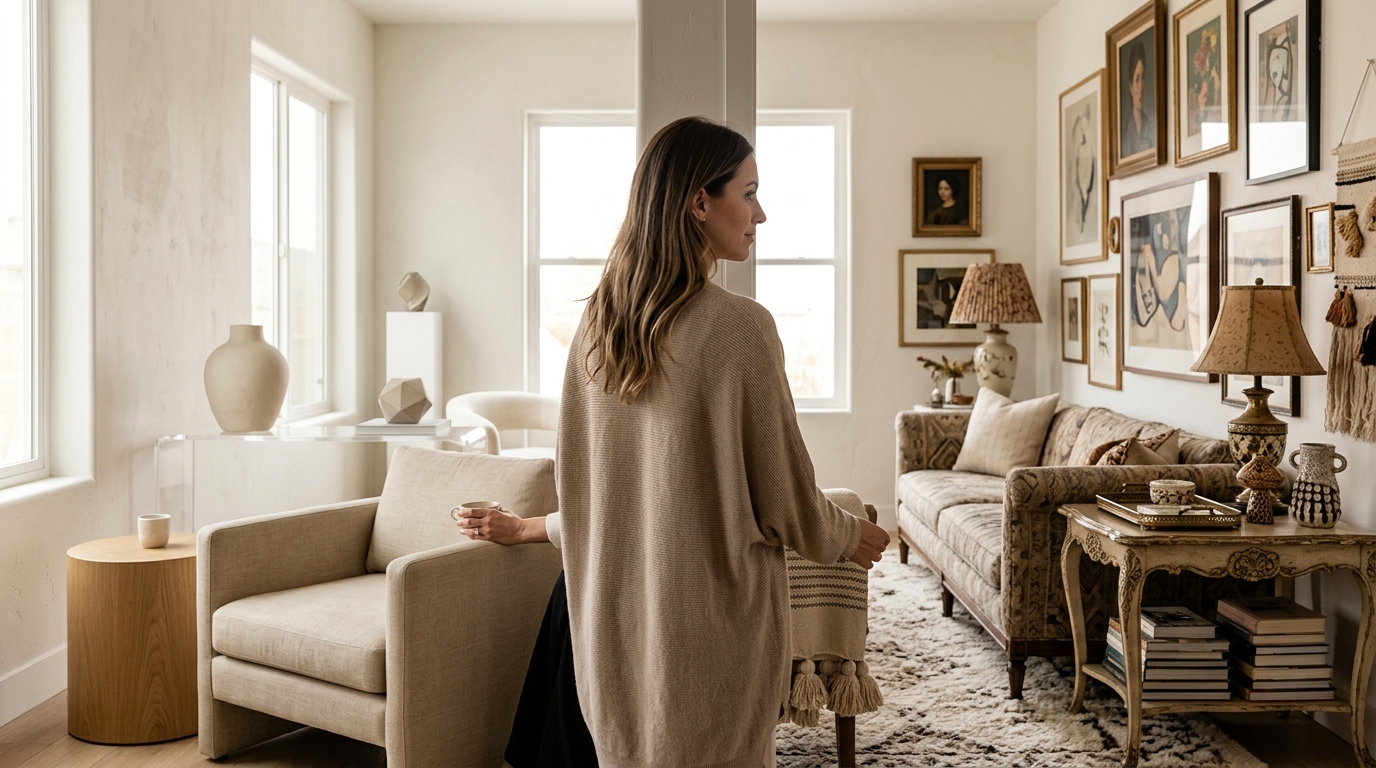
Minimalist vs. Maximalist: A Beginner's Guide to Choosing Your Style
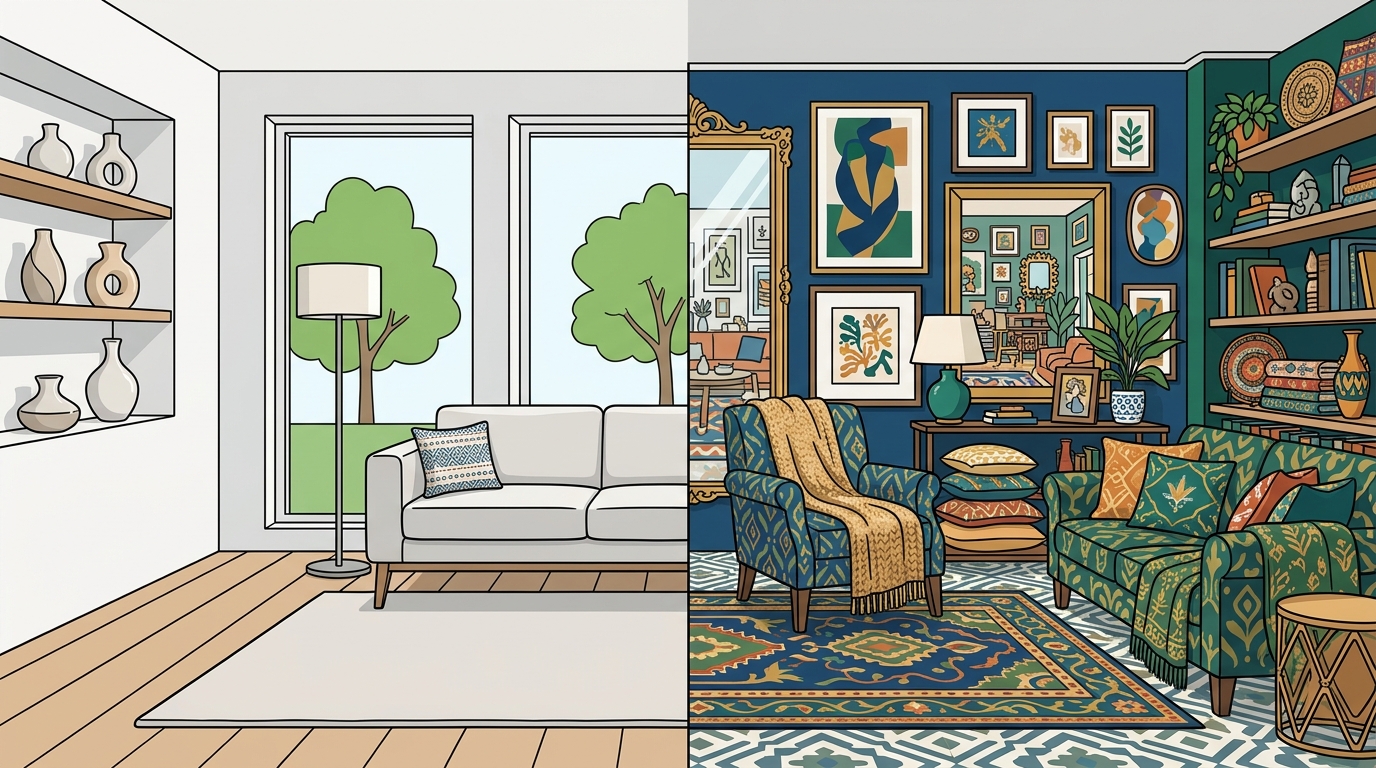
Choosing between modern minimalist and maximalist styles depends on your comfort with visual density and your desire for personal expression. Minimalism prioritizes clean lines and negative space, while maximalism embraces bold patterns and layered textures. For beginners, the best approach is to start with a neutral foundation and add personality gradually. Scarlet Tassel offers curated collections that help you test both aesthetics without committing to a full room overhaul.
Defining the Core Aesthetics
Modern minimalist design is an approach that emphasizes simplicity, functionality, and the removal of visual clutter. It relies on a restrained color palette, typically featuring neutrals like white, gray, and beige. The goal is to create a sense of calm and order through careful curation. Every item in a minimalist space serves a specific purpose, whether functional or decorative.
Understanding these definitions helps you identify which environment feels more natural to you. If you find clutter stressful, minimalism may be your starting point. If you feel drained by empty spaces, maximalism might be your true calling. Both styles require intention, but they achieve it through opposite methods.
Starting with a Neutral Foundation
For beginners, the safest entry point into either style is establishing a neutral foundation. This means selecting large furniture pieces, such as sofas, beds, and rugs, in solid, understated colors. A neutral base acts as a canvas that allows you to experiment with accents later. It prevents the room from feeling chaotic before you have added your personal touches.
When building this foundation, consider the scale of your furniture. Large pieces should be simple in form to avoid overwhelming the space. For example, a clean-lined sofa in a light gray fabric provides a perfect backdrop for both minimalist and maximalist accents. This approach allows you to change your style direction later without replacing major investments.
Scarlet Tassel's For the Home collection features many neutral-toned items that serve as excellent foundational pieces. These items are designed to blend seamlessly into various styles, giving you flexibility as you refine your taste.
Layering Personality and Texture
Once your foundation is set, you can begin adding layers of personality. In a minimalist space, this means selecting a few high-impact items that add warmth without creating clutter. A single textured throw blanket, a pair of statement pillows, or a unique piece of art can transform a stark room into a cozy one. The key is restraint; each addition must earn its place.
In a maximalist space, layering is the primary design tool. You can mix patterns, such as stripes with florals, and combine different textures, like velvet with wood. The goal is to create a rich, immersive environment. Start with one bold element, such as a patterned rug or a vibrant wall color, and build around it. This prevents the space from feeling disjointed.
Texture plays a crucial role in both styles. In minimalism, texture provides visual interest without adding color. In maximalism, texture adds depth to a busy palette. Consider incorporating items like a neoprene mat or a woven basket to introduce tactile variety. These small details make a space feel lived-in and inviting.
Navigating Color and Pattern
Color is the most significant differentiator between these two styles. Minimalist palettes are typically monochromatic or analogous, using shades of the same color or adjacent colors on the color wheel. This creates a harmonious and calming effect. Maximalist palettes are often complementary or contrasting, using bold, saturated hues to create energy and excitement.
Pattern usage follows a similar logic. Minimalists use pattern sparingly, often limiting it to a single item like a pillow or a rug. Maximalists use pattern as a primary design element, mixing multiple patterns throughout the room. When mixing patterns, look for a common color thread to tie the designs together. This creates cohesion even in a busy space.
If you are unsure which approach to take, try a 60-30-10 rule. Use 60% neutral colors, 30% secondary colors, and 10% accent colors. This ratio works well for both styles but leans slightly toward minimalism. To shift toward maximalism, increase the percentage of bold colors and patterns. This method provides a structured way to experiment with color without feeling overwhelmed.
Practical Considerations for Beginners
Consider your lifestyle and maintenance preferences when choosing a style. Minimalist spaces are often easier to clean and maintain because there is less clutter. Fewer items mean less dust and less time spent organizing. Maximalist spaces require more upkeep, as they involve more items and surfaces to care for. If you have a busy schedule, minimalism may be a more practical choice.
Also consider your budget. Minimalism often requires higher-quality, fewer items, which can be expensive upfront. Maximalism allows for a mix of price points, as you can fill a space with affordable accessories. However, maximalist spaces can become costly if you constantly add new items. Plan your budget accordingly to avoid overspending.
Scarlet Tassel offers a range of price points to suit different budgets. You can find affordable accents in the Sale section, which allows you to experiment with different styles without breaking the bank. This makes it easier to test both minimalist and maximalist approaches before committing to a full room redesign.
Key Takeaways
- Minimalism emphasizes simplicity and negative space, while maximalism embraces abundance and layering.
- Start with a neutral foundation to create flexibility for future style changes.
- Texture is essential in both styles, providing visual interest without adding clutter.
- Color palettes differ significantly, with minimalists using neutrals and maximalists using bold hues.
- Maintenance and budget are practical factors that should influence your style choice.
- Experiment with small accents to test which style feels more natural to you.
Frequently Asked Questions
Can I mix minimalist and maximalist styles?
Yes, you can create a balanced look by using a minimalist foundation with maximalist accents. This approach, often called "maximalist minimalism," allows you to enjoy the calm of clean lines with the personality of bold details.
How do I start decorating if I have no style preference?
Begin by observing what makes you feel comfortable. Do you prefer empty spaces or filled ones? Start with neutral basics and add items that you love. Your natural choices will reveal your style preference over time.
Is minimalism more expensive than maximalism?
Not necessarily. Minimalism often requires higher-quality pieces, which can be costly. Maximalism allows for a mix of price points, but the total cost can add up if you constantly add new items. Both styles can be achieved on a budget with careful planning.
What are the best colors for a beginner?
Neutral colors like white, gray, and beige are the safest starting points. They work in both minimalist and maximalist styles and provide a flexible base for adding color later.
How do I avoid making my space look cluttered?
Curate your items carefully. Choose a few high-impact pieces rather than many small ones. Use storage solutions to hide clutter and maintain a sense of order. Regularly review your items and remove those that no longer serve a purpose.
Finding Your Balance
Choosing between minimalist and maximalist styles is a personal journey that reflects your values and lifestyle. There is no right or wrong answer, only the choice that feels most authentic to you. By starting with a neutral foundation and experimenting with accents, you can discover what works best for your space. Scarlet Tassel is here to support you in this process, offering a curated selection of items that help you express your unique style. Visit our contact page to learn more about how we can help you transform your home.