
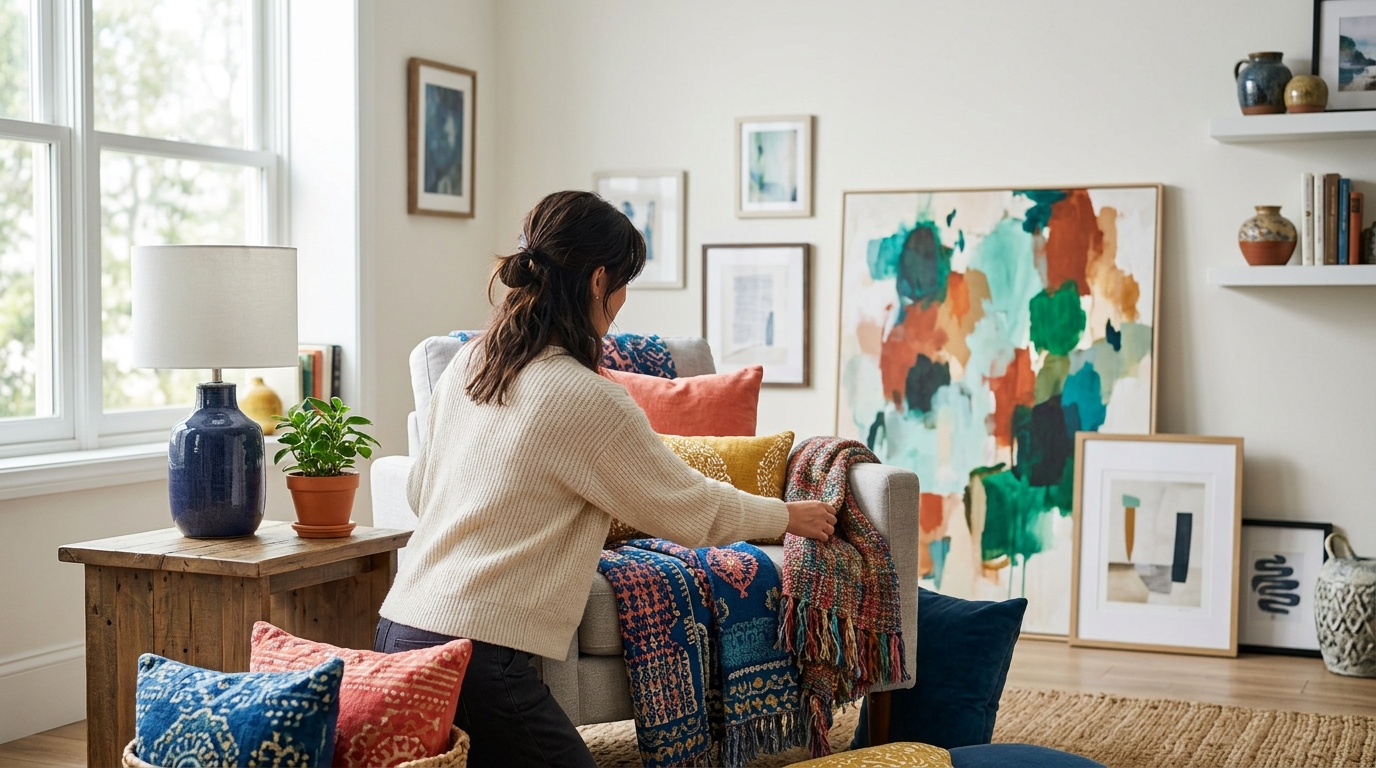
Adding color to a room without painting is entirely possible and often more flexible than a full repaint. You can transform a space using artwork, rugs, curtains, plants, accent furniture, and removable wallpaper. This guide from Scarlet Tassel explores six practical methods to refresh your home decor. We focus on durable, stylish, and easy-to-change options that fit any budget.
Artwork and Prints
Choosing the Right Scale
Scale matters more than color when hanging art. A single large piece often looks more intentional than a cluster of small frames. If you have a large sofa, hang a piece that is two-thirds the width of the furniture. This creates visual balance and draws the eye upward. For additional details, review the .
Frame Colors
Do not ignore the frame. A bold frame in a contrasting color can add a second layer of color to the wall. For example, a black frame around a colorful abstract print adds depth. You can also mix frame colors to create a curated, collected look over time. For additional details, review the Customer Experience.
Area Rugs
An area rug is a foundational element in interior design. It anchors the room and defines the seating area. Rugs come in every color and pattern imaginable. A bold rug can serve as the primary color source in a room with neutral walls and furniture. For additional details, review the Frequently Asked Questions.
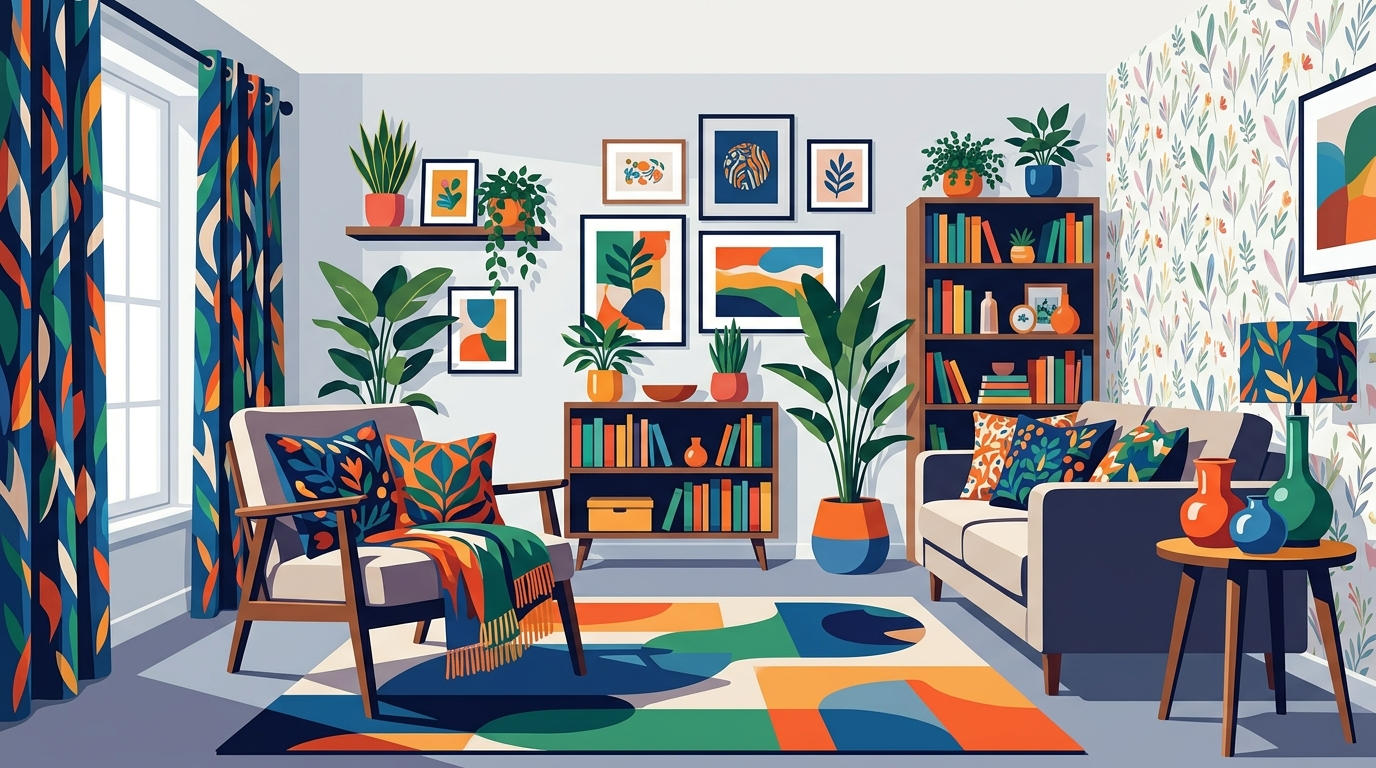
Pattern and Texture
Consider the pattern when selecting a rug. Geometric patterns add modern energy, while floral designs bring a softer, traditional feel. Texture also plays a role in perceived color. A shaggy rug in a muted tone looks different than a flat-weave rug in the same color. The pile height affects how light reflects off the surface.
Placement Tips
Place the rug so that the front legs of your furniture sit on it. This ties the room together. If you are using a rug in a dining room, ensure it extends at least 24 inches beyond the table edges. This allows chairs to move without scraping the floor.
Curtains
Curtains are a large vertical surface that can dramatically change a room's mood. They are often overlooked as a color source, but they are highly effective. You can choose solid colors, stripes, or intricate patterns. Curtains also add softness and texture to a space.
Length and Style
Hang curtains from the ceiling or just above the window frame. This creates the illusion of higher ceilings. The length should just kiss the floor or puddle slightly. Avoid curtains that are too short, as they can make the room feel smaller and less finished.
Color Coordination
Use curtains to pull colors from other elements in the room. If you have a blue rug, choose curtains with blue accents. This creates a cohesive look. You can also use curtains to introduce a new color that is not present elsewhere in the room.
Plants and Planters
Plants bring life and natural color to any room. The green of leaves is a universal accent that works with almost any palette. Beyond the foliage, the pot is a major design element. You can choose planters in bold colors, patterns, or materials like ceramic, metal, or woven fiber.
Low-Light Options
If your room lacks natural light, choose plants that thrive in low-light conditions. Snake plants, pothos, and ZZ plants are excellent choices. They require minimal care and add greenery without demanding high maintenance. Grouping plants of different heights creates a lush, jungle-like effect.
Planter Selection
Match the planter style to the room's aesthetic. Modern rooms suit sleek, minimalist pots in concrete or matte black. Traditional rooms look better with terracotta or ornate ceramic pots. You can also use decorative trays or stands to elevate the plant and add another layer of color.
Accent Furniture
Accent furniture is a statement piece that draws attention. A single bold chair, ottoman, or side table can transform a room. You do not need to repaint the entire room to add color. One well-chosen piece can serve as the focal point.
Choosing a Focal Point
Identify the natural focal point of the room. This might be a fireplace, a large window, or a piece of art. Place your accent furniture near this point. For example, a bright yellow armchair in front of a neutral sofa creates a striking contrast. The color should complement, not clash with, the existing palette.
Materials and Finishes
Removable Wallpaper
Removable wallpaper is a game-changer for adding color without commitment. It adheres to walls without damaging the paint underneath. You can apply it to an accent wall, a closet door, or even the ceiling. This is the closest you can get to painting without the permanence.
Application Tips
Ensure the wall is clean, dry, and smooth before applying wallpaper. Use a squeegee to remove air bubbles. Work from the center outward to maintain alignment. If you make a mistake, you can usually peel it back and reapply. This makes it a forgiving option for beginners.
Design Options
Key Takeaways
- Artwork and prints are the quickest way to add color and personality to a room.
- Area rugs anchor the space and can serve as the primary color source.
- Curtains add vertical color and softness, and should be hung high and long.
- Plants and planters bring natural greenery and can be styled with bold pots.
- Accent furniture provides a focal point and adds a pop of color.
- Mix and match these elements to create a cohesive and vibrant room.
- Start with one or two elements and build from there to avoid overwhelming the space.
Frequently Asked Questions
Can I use removable wallpaper on textured walls?
It is best to use removable wallpaper on smooth, flat walls. Textured walls can make it difficult for the wallpaper to adhere properly and may cause bubbles or peeling. If your walls are textured, consider using a primer to smooth the surface before applying wallpaper.
How do I choose the right rug size for my room?
The rug should be large enough to anchor the furniture. In a living room, the front legs of the sofa and chairs should sit on the rug. In a dining room, the rug should extend at least 24 inches beyond the table edges. This ensures a balanced and cohesive look.
What colors work well together in a room?
Neutral colors like beige, gray, and white work well with almost any accent color. You can use the 60-30-10 rule, where 60% of the room is a dominant color, 30% is a secondary color, and 10% is an accent color. This creates a balanced and harmonious palette.
Are plants safe for pets?
Not all plants are safe for pets. Some common houseplants, like lilies and pothos, are toxic to cats and dogs. Research the specific plant you are considering to ensure it is safe for your pets. Choose pet-friendly options like spider plants, Boston ferns, or African violets.
How do I hang curtains correctly?
Hang curtains from the ceiling or just above the window frame to create the illusion of height. The length should just kiss the floor or puddle slightly. Use a level to ensure the rod is straight. This creates a polished and professional look.
Can I use removable wallpaper in a rental?
Yes, removable wallpaper is an excellent option for rentals. It does not damage the paint underneath and can be easily removed when you move out. This allows you to personalize your space without violating your lease agreement. Just be sure to check with your landlord before applying any wall coverings.
Conclusion
Adding color to a room without painting is a creative and flexible way to refresh your home. By using artwork, rugs, curtains, plants, accent furniture, and removable wallpaper, you can transform any space. These elements are easy to change and allow you to experiment with different styles and colors. Explore the Scarlet Tassel collection to find the perfect pieces for your home. Start with one element and build from there to create a vibrant and inviting space.